|
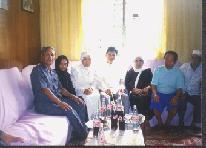
The History of my Family
Raida Umpa Amer, my wife, Filipino Muslim, finished the degree of Bachelor of Science in Computer Management in 1993 after received the diploma of two years Secretarial Course. She has seven brothers and four sisters. She is the 3rd daughter and sixth rank among her brothers and sisters. Her father, Hadji Amer Manardas Bitor, second cousin of my father, is now retired Customs Examiner at the Manila International Airport and her mother, Hadjah Amerah Umpa Hadji Yahya is the younger sister of my mother. My three children; Rayyan, Rayhanah and Ziyad's birth date:
Rayyan is the eldest, born on November 27, 1996.
Rayhanah is my only one daughter, born on August 19, 1998.
Ziyad is the youngest, born on November 3, 2001.
They are all living with me here in Dammam, Eastern Province, Saudi Arabia. My father's name is Datu Sabdullah Omar Banding, the only one son of Datu Banding Ampaso, has four sisters and the second rank among his sisters.
My mother's name is Bae Pagnangan Umpa Hadji Yahyah, has fifteen brothers and sisters and the 3rd rank among her seven brothers and eight sisters. My parents are currently living in Magsaysay, Lanao del Norte, Mindanao, Philippines. I have five sisters and one & only brother. The following is the list of my brother and sisters:
1. Monirah Umpa Sabdullah-Magdara, has eight children; four sons and four daughters (eldest daughter deceased), married to Magdara Ampasa (deceased)
2. Monasarah Umpa Sabdullah-Omar (deceased), has one and only daughter.
3. Morad Umpa Sabdullah, married to Aisah Umpa Amer, has one & only son, Adly.
4. Norah Umpa Sabdullah-Omar, married to Macur Saripa Adel Omar with six children.
5. Saadudin Umpa Sabdullah, webmaster, has three children.
6. Sitie Nour Umpa Sabdullah-Ampaso, married to Latip Somasabing Ampaso with one daughter.
7. Sarah Umpa Sabdullah-Tawantawan, married to Saadan Banding Tawantawan, her first cousin with two children.
About Maranao Tribe
The “people of the lake" lived in separation far from the stylish life of the cities are called Maranaos. They developed around the edge of Lake Lanao, situated at the Islamic City of Marawi, Lanao del Sur, Mindanao, Philippines. The lake is bordered with traditions and legends. A predominantly interesting story says that before the Spanish administration, St. Francis Xavier came to Marawi to sermonize and convert the Muslims and failed to his mission..
On the other hand, a well-known Maranao Poet Datu Tingcap G. Pandi said that the word “MERANAO� is a compound word self-possessed of “MERA� which means “peacock� and “NAO� which means “awake�. Literally speaking, “meranao� means “an awake peacock�. Peacock was declared India’s National Bird in 1963. It is also considered the most beautiful bird in the world.
The Maranaos are the largest Moro and cultural minority in the Philippines, numbering more than 840,000 in the late 20th century. They are known for their brasswork, fine mosques, rish raiment, exotic dances, and love for Marano’s music which is called “kambayok�, usually creative, the Maranao generous stylish display and celebration. Their festivals are rich in bright hues of red and purple seen on brilliant banners and sophisticated silk malongs on both men and women.
The extent of Islamic religion in Marawi, the capital of the province of Lanao del Sur, and the only chartered city in the country with largely Muslim population, followed the archetype in Indonesia and other Malay areas. It started with the coming of Arab traders, mixture with the Maranaos and subsequently creating local communities.
The first connections were mainly economic but the Muslim teachers and Islamic missionaries pursued the native traders with strength, instructing them with Islamic religion to build up their hold on the natives. Finally, the Maranao tribal chief embraced Islamic religion and the people followed. Shortly from then on Islam spread throughout the south. By the time the Spaniards arrived in the 16th century, Islam had taken profound root throughout the south.
The Maranao families are traditionally large. They are close-knit people that in a family with 10 members is considered small. Even in a wealthy family, married members of the same family tend to live in the same house. In some great Maranao merchant houses, the central room is shared by as many as six married families. The Maranaos are also known for their business penetration and commercial ability.
Links to Other Sites
My Links |